
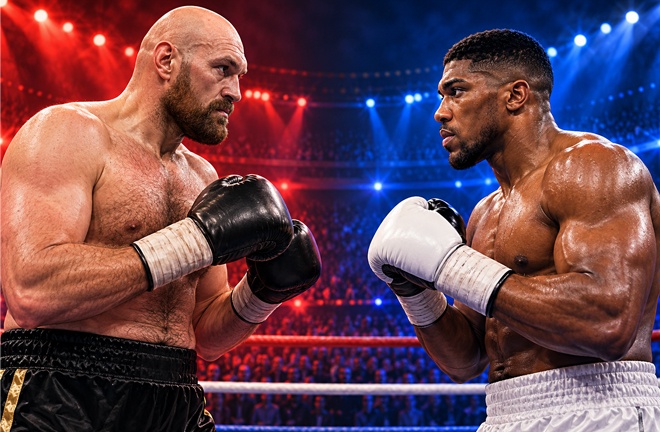
There is no Fury vs Joshua rematch clause for their December 11 showdown, according to Eddie Hearn and Spencer Brown.
The British heavyweights are scheduled to meet at Cardiff’s Principality Stadium, with neither guaranteed a return bout under the current agreement.
Hearn confirms one-fight agreement
Joshua’s promoter Hearn told Sky Sports News: “No rematch clause. It’s one fight, one-off.”
However, he suggested a blockbuster first meeting could create interest in another contest.
Fury’s team leaves options open
Fury’s manager Brown also confirmed the agreement covers a single fight. He indicated that victory could steer Fury towards another meeting with Oleksandr Usyk.
Brown suggested defeat would leave either heavyweight facing difficult decisions about his career. Retirement remains a possibility, rather than a confirmed outcome.
Could Fury and Joshua still have a rematch?
The absence of a clause does not prevent a second fight. It means fans should distinguish between a contractual rematch provision and a future bout negotiated separately.
What does no rematch clause mean?
In boxing, a rematch provision can give a fighter a contractual route to another meeting after the first contest. Its precise effect depends on the wording of the agreement, including any conditions and deadlines.
Without that provision, the result does not automatically activate a return bout. The fighters and their representatives would need to reach terms if they wanted to meet again.
That distinction matters when assessing the stakes. A narrow decision, a dramatic finish or a controversial result might generate public demand for another fight. However, demand alone does not settle a date, venue, purse or the willingness of both sides to take part.
A convincing victory could also change the appeal of a second meeting. The winner might see greater sporting or commercial value in facing a different opponent, while the loser could choose a different route back.
A future negotiation could also involve different circumstances from the original deal. Broadcaster interest, scheduling and the availability of alternative opponents could all influence whether a return contest makes sense. For supporters hoping to watch the rivalry develop over two fights, the important point is that a second meeting would be a new decision for the participants.
Was Anthony Joshua prepared to walk away from a fight with Tyson Fury if a UK venue couldn’t be agreed? 💭 https://t.co/G46s5QmjTs
— Sky Sports Boxing (@SkySportsBoxing) October 1, 2026
Those are possible scenarios, rather than predictions about how this contest will unfold. The contractual position gives neither outcome a guaranteed sequel.
For now, both camps describe a single-fight deal. Any return meeting would depend on a further agreement.